Partner opportunity snapshot
Healthcare recall readiness is a strong entry point because it starts with an urgent, familiar problem: teams need to know what is affected, where it is, whether it is active, and what needs attention first.
For partners, that creates a focused first engagement with a clear expansion path.
Ideal Customer
- Mid-size health systems
- 2-4 hospitals plus outpatient facilities
- Distributed device environments
- Device data spread across systems
- Manual recall response processes
Recall Readiness Assessment
- Evaluate recall response readiness
- Review device visibility gaps
- Validate firmware and software visibility
- Identify operational workflow bottlenecks
- Create roadmap for next steps
Expansion Opportunity
- Operational response readiness services
- Cyber operational readiness
- Coordinated response workflows
- Operational resilience services
- Managed operational intelligence
Why healthcare recall response is difficult today
Healthcare teams often have the information needed to respond to recalls and cybersecurity alerts.
The problem is that the information lives in too many places.
Device records, software details, network activity, location, ownership, and clinical context are often spread across separate systems and teams. During a recall, teams need those details quickly. In many environments, they still have to assemble the answer manually.
Common Operational Challenges
- Device records live in multiple systems
- Active devices are hard to confirm
- Location data may be outdated
- Software and firmware versions are difficult to verify
- Teams work from different views
- Response depends on manual follow-up
Why Inventory Alone Is Not Enough
A recall does not only ask what the organization owns. It asks:
- Which affected devices are still in use?
- Where are they right now?
- What software or firmware are they running?
- Which departments, sites, or workflows are affected?
- What needs to happen first?
Most tools answer part of this.
Few connect the full picture.
Why cybersecurity alerts raise the stakes
Cybersecurity advisories often require teams to confirm whether affected devices, software versions, firmware versions, or operating systems are active in the environment.
That means teams need to connect:
- Device identity
- Software version
- Firmware status
- Network presence
- Operational dependencies
- Patient-care impact
When those details are disconnected, response slows down.
Fragmented vs Connected Operational Visibility
Disconnected Healthcare Visibility
Data healthcare teams must search across:
- Inventory systems
- Maintenance systems
- Network tools
- Clinical systems
- Spreadsheets
- Separate teams
Connected Operational Intelligence
Context WanAware helps connect:
- Device identity
- Firmware and software visibility
- Location
- Ownership
- Network activity
- Operational context
What Recall Response Looks Like in Practice
This is the workflow partners should listen for during discovery.
Recall Response Workflow
1
Recall or Alert Arrives
Manufacturer notice, FDA advisory, or cybersecurity alert identifies affected criteria.
2
Teams Search Systems
Inventory and maintenance systems are checked first.
3
Active Devices Are Hard to Confirm
Teams need to determine what is still active and where it is located.
4
Manual Validation Begins
Teams compare records, contact departments, and investigate gaps manually.
5
Response Slows
Disconnected systems and workflows delay response coordination.
Questions partners should ask healthcare clients
Primary discovery question
“When a recall happens, how quickly can your team identify what is still active and where it is?”
Discovery and Qualification Checklist
Discovery Questions
- How do you identify affected devices today?
- Can you confirm which devices are still active?
- Can you verify current location quickly?
- How do you validate software or firmware versions?
- Which systems contain your device records?
- Which teams participate in recall response?
- How much of the process is manual?
- How long does recall validation typically take?
Strong Fit Indicators
- Device data exists across multiple systems
- Inventory records are difficult to validate
- Teams rely on spreadsheets or email chains
- Firmware visibility is limited
- Cybersecurity alerts require manual investigation
- Departments maintain separate records
- Response depends on institutional knowledge
Recommended first engagement
Recall Readiness Assessment
The best first project is a focused Recall Readiness Assessment.
This gives healthcare clients a practical way to evaluate response gaps without starting with a large transformation project. It also gives partners a clear, sellable engagement that can expand into ongoing visibility and operational intelligence services.
1
Stakeholders
- Clinical engineering
- Biomedical engineering
- IT operations
- Security teams
- Infrastructure teams
- Compliance leaders
- Operational leadership
2
Assessment Scope
- Device visibility
- Active versus recorded devices
- Firmware and software visibility
- Recall workflow gaps
- Team coordination
- Operational visibility limitations
3
Deliverables
- Recall readiness findings
- Device visibility gap analysis
- Firmware and software visibility review
- Workflow recommendations
- Expansion roadmap
4
Customer Outcomes
- Faster device identification
- Better visibility into active devices
- Stronger firmware awareness
- More coordinated workflows
- Reduced manual investigation
How WanAware supports recall readiness
WanAware helps partners connect the data healthcare teams need during recalls and alerts.
Instead of forcing teams to replace existing systems, WanAware connects across them to create a more complete operational view.
Operational Intelligence Roadmap
Phase 1
Connect Operational Data
- Inventory systems
- Maintenance platforms
- Network tools
- Clinical systems
- Operational data sources
Phase 2
Correlate Device Intelligence
- Device identity
- Firmware and software details
- Ownership
- Location
- Network activity
- Operational relationships
Phase 3
Validate Active Devices
- Compare recorded vs active devices
- Confirm operational visibility
- Improve response readiness
Phase 4
Operationalize Response Workflows
- Search
- Prioritize
- Coordinate
- Report
Phase 5
Expand Operational Intelligence
- Cybersecurity visibility
- Vulnerability response
- Dependency awareness
- Operational resilience
- Managed services
Why this is partner-friendly WanAware supports a no rip-and-replace approach.
Partners can improve visibility across systems clients already use, then expand into higher-value services over time.
Why WanAware is different
WanAware is built for operational environments where critical information lives across disconnected systems.
Recall Readiness Differentiators
Differentiator
- Agentless deployment
- Schemaless architecture
- Relationship graph
- Integrated operational intelligence
- No rip and replace
Why It Matters for Recall Readiness
- Supports visibility without installing software on clinical devices.
- Helps connect varied data sources without forcing one rigid model.
- Shows how devices, systems, owners, locations, and dependencies relate.
- Connects device context to action and prioritization.
- Works with existing healthcare systems and records.
Healthcare teams need more than inventory records.
They need connected operational context.
Expansion roadmap
A recall readiness assessment often reveals broader visibility and coordination gaps.
Partners can use those findings to expand into long-term operational intelligence services.
How Recall Readiness Expands Into Additional Services
Assessment
- Recall Readiness Assessment
- Operational Response Workflow Review
- Firmware / Software Validation
- Dependency Review
- Documentation Review
- Response Workflow Review
What It Reveals
- Slow device identification
- Manual coordination bottlenecks
- Limited version awareness
- Limited operational context
- Scattered records
- Manual coordination gaps
Expansion Opportunity
- Inventory modernization
- Response readiness services
- Cyber operational readiness
- Dependency-informed response coordination
- Compliance readiness
- Managed operational response services
Expansion message for partners Start with a specific, urgent problem. Show value quickly. Then expand into visibility, cybersecurity, resilience, and operational intelligence services.
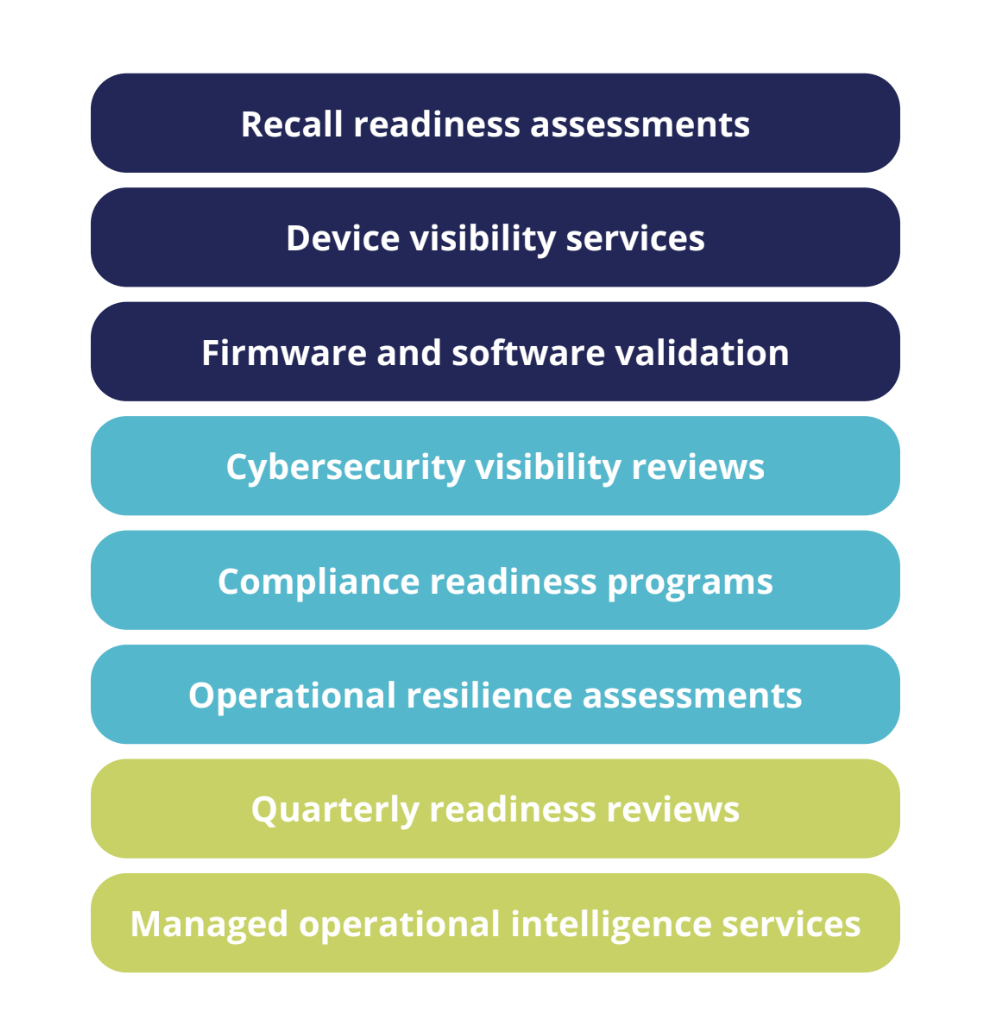
White-labeled service opportunities
WanAware gives partners a way to package healthcare operational intelligence under their own brand.
Why this creates recurring revenue
Recall readiness is rarely a one-time issue. Device environments change, software versions change, alerts continue, and operational dependencies evolve.
That creates a natural path into recurring services.
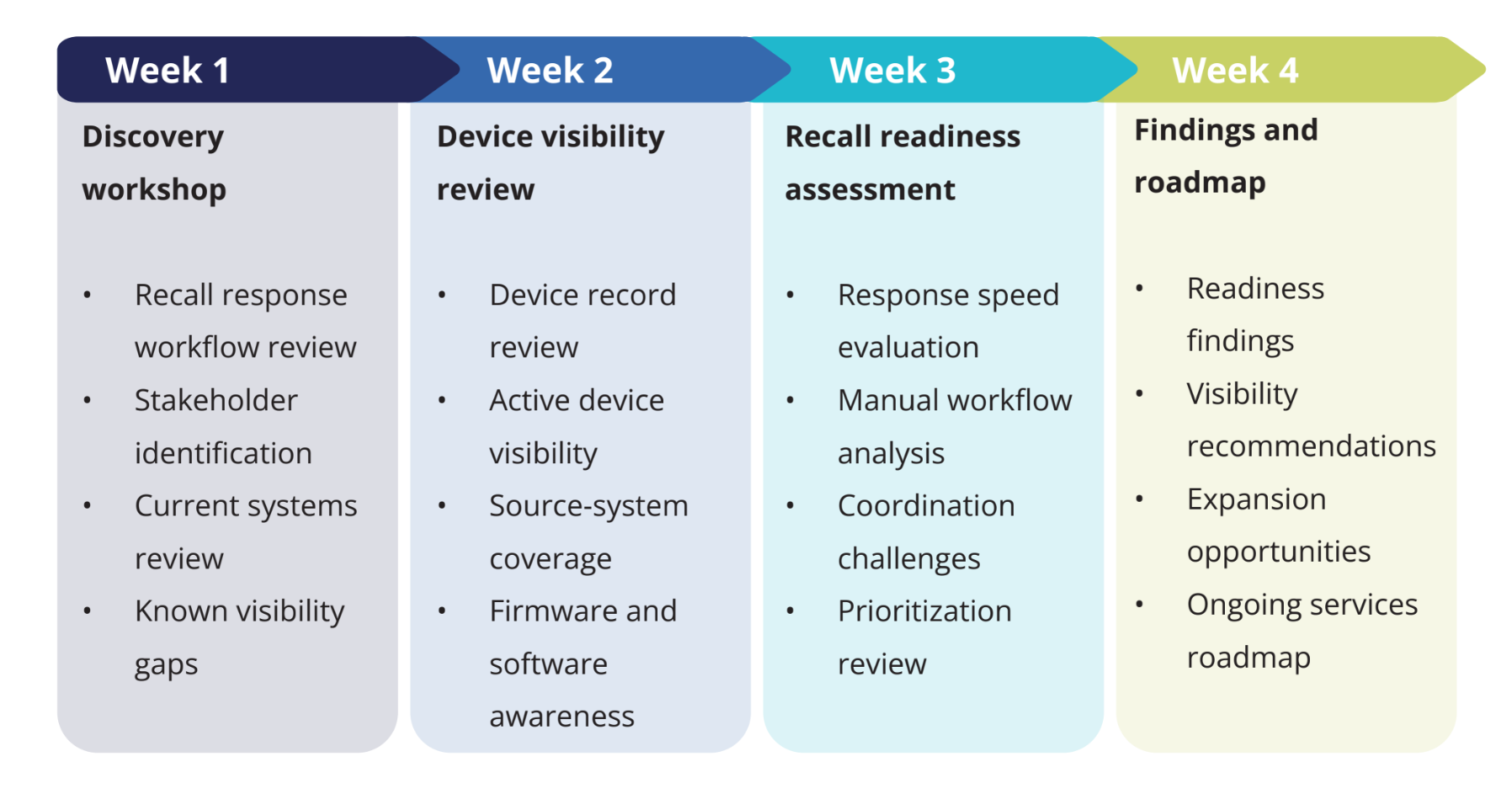
Quick-start delivery motion
Use this 30-day motion to turn the playbook into a client engagement.
Already a WanAware partner?
Use this playbook to start healthcare recall readiness conversations and identify first-project opportunities.
Not yet a partner?
Become a WanAware Partner to deliver healthcare operational intelligence services.