



The WanAware Platform: IT Dependency Mapping
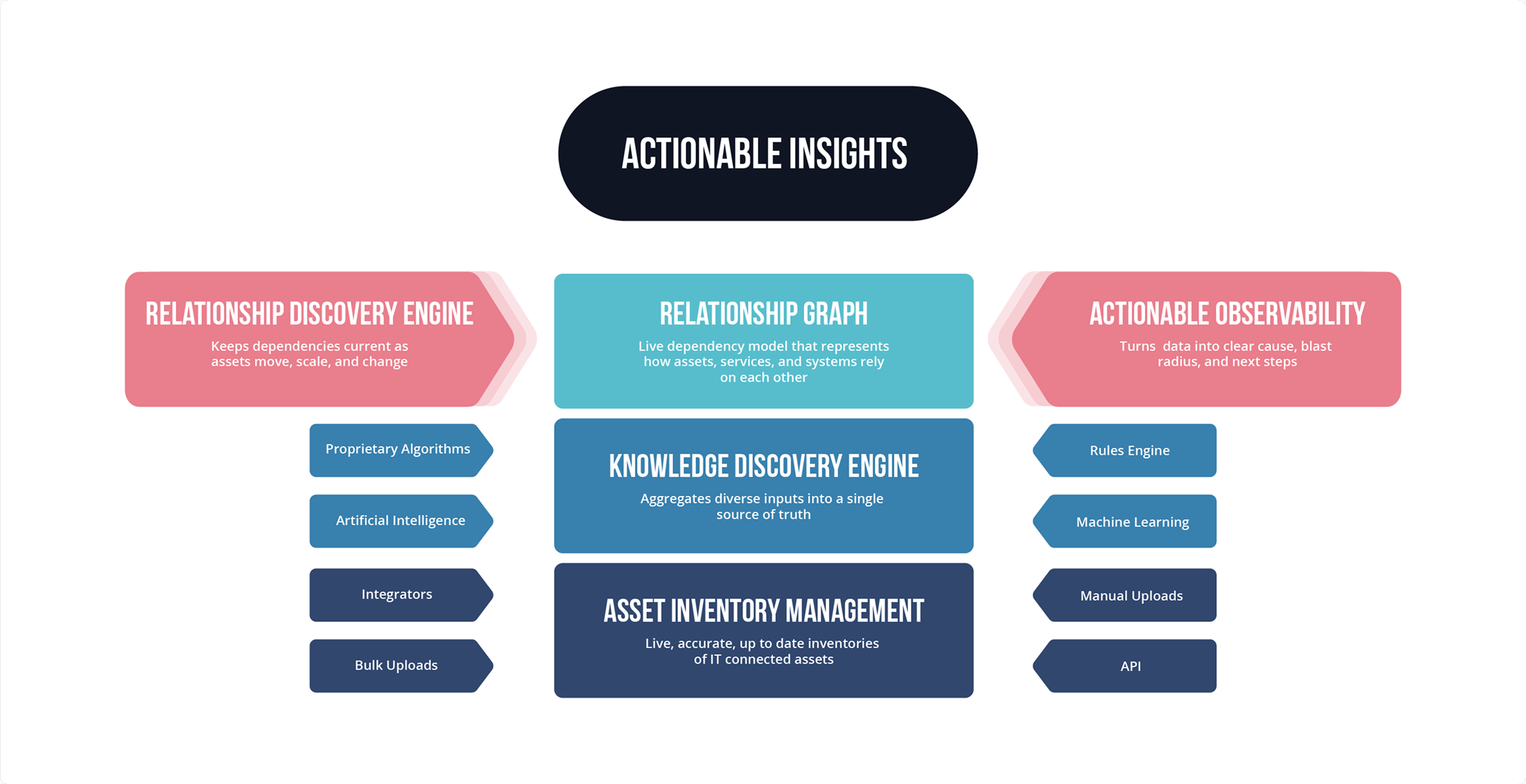
WanAware products work because they share one foundation: a live model of how your assets, services, and third-party dependencies connect. The platform keeps that model current, then uses it to explain what changed, what it affects, and what to do next. They are the engines that make AIM and Actionable Observability run.
Platform components
These components work together as one system.

Relationship Graph
Stored dependency paths you can traverse upstream and downstream.
The Relationship Graph is the live dependency model that represents how assets, services, and systems rely on each other. It is not a visualization layer. It is the stored structure used for reasoning during incidents, change reviews, and security analysis.

Relationship Discovery Engine (RDE)
Keeps relationships current as assets move, scale, and change.
RDE continuously ingests evidence from your environment and updates dependency relationships so the graph reflects current state, not stale snapshots.
Knowledge Discovery Engine (KDE)
Uses the graph to isolate initiating cause, calculate blast radius, and reduce noise.
KDE evaluates performance, availability, security, and change signals against the Relationship Graph to produce explainable conclusions instead of raw alerts.
Where this shows up

Asset Inventory Management (AIM)
Discover, manage, and retire assets with full dependency context. AIM uses the platform to keep inventory accurate and connected, so decisions are based on real relationships, not lists.

Actionable Observability
Turn performance, availability, and security signals into clear cause, blast radius, and next steps. Actionable Observability uses the same platform foundation to explain what changed and what it affects.

See the platform at work in your environment
The platform itself is not something you configure. You experience it through WanAware products. Start a free trial to see how live dependency context powers inventory, observability, and faster decisions in real conditions.